
Third-party generative AI tools outperform brand-owned chatbots in customer service
A Gartner survey of more than 3,500 B2B and B2C customers found that customers are three times more likely to use third-party generative AI tools for customer service than brand-owned chatbots. Over the past year, usage of third-party generative AI tools has doubled, while usage of enterprise-provided chatbots has shown no statistically significant growth since 2022. Analysts note that brands need to rethink their AI customer service strategies and recommend transforming the entire digital experience into an AI-driven conversational interface.
Key Takeaways:
- A Gartner survey of more than 3,500 B2B and B2C customers found that customers arethird-party generative AI toolsthree times more likely to use them for customer service than brand-owned chatbots.
- Eric Keller, Senior Director Analyst in the Gartner Customer Service and Support practice, said the number of consumers using third-party generative AI tools has doubled in the past year. However, since 2022, there has been no statistically significant increase in the number of customers using enterprise-provided chatbots.
- "Third-party AI usage has doubled while customer service chatbot usage has not grown—this should certainly give pause to leaders who believe the future of customer service lies in enterprise-owned AI chatbots," Keller told CX Dive.
Deep Dive:
FromAirbnbtoVerizon, countless brands have launched AI chatbots. But whether consumers are happy to use them remains an open question.
"If customers are already using and engaging with your chatbot, then enhancing it with AI to help it solve more problems is a good thing," Keller said. "If customers are not yet engaging with your chatbot, simply adding AI to it may not drive more engagement. So you really need to develop a proactive adoption strategy."
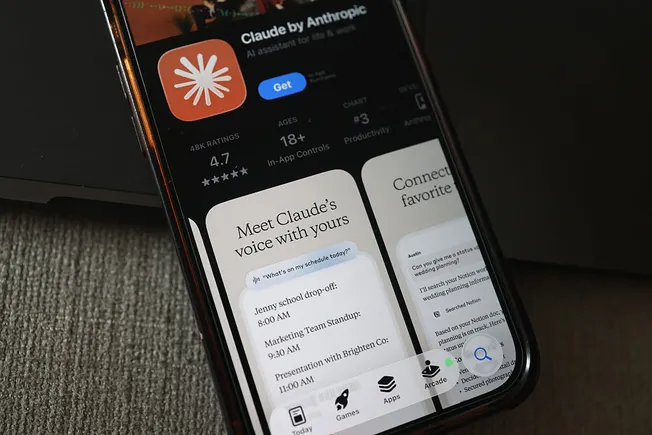
AI has become more prevalent in consumers' lives. Two-thirds of consumers use generative AI in their personal lives, at work, or both—including third-party tools like Claude, work assistants like Copilot, and AI chatbots on brand websites.
But most of that usage is concentrated in third-party AI tools.
Keller believes this preference reflects not only customers' familiarity with third-party tools like ChatGPT and Claude, but also the quality of these tools themselves.
"They use these tools in all aspects of their lives and increasingly trust them and their responses," Keller said. "So when they have a customer service issue, it makes perfect sense that they turn to the tool they use every day rather than the chatbot on a company website that they rarely use."
Brand investments in generative AI customer service often misalign with customer behavior, leading to disappointing returns on investment. There are two areas where brand chatbot strategies are off the mark and can be improved: taking action and presentation.
Customers use generative AI to answer questions and take actions. Gartner found that more than half of customers (58%) have used it to complete a task, while nearly three-quarters of B2B customers have used it to complete a task.
"This is where brand-owned chatbots are uniquely positioned right now, because you can't do these transactions through ChatGPT," Keller said. "But often brand chatbots simply answer questions. Then if you want to transact, update, add, or change something, it sends you a link to go elsewhere on the website. That's a missed opportunity."
Brands can also improve the design and presentation of their chatbots.
"I think the presentation of a little chatbot popping up in the bottom right corner of the screen is starting to feel a bit outdated," Keller said. "What we see more advanced companies doing is making almost the entire digital experience a single intelligent entry point—not a standalone chatbot, but the entire digital experience being an AI-driven conversational interface."
Keller said leading organizations are no longer offering website homepages with headings, links, and different navigation areas, but rather offering experiences that are more conversational than navigational.
Perhaps it manifests as a search box asking: "What would you like to accomplish with us today?"