
United Airlines Partners with Lyft: Strategic Logic and Industry Insights of Mileage Redemption for Ride Services
The loyalty program partnership announced by United Airlines and Lyft this spring sets a precedent for direct mileage redemption for rides between a U.S. airline and a ride-hailing platform. Experts believe that, given the absence of direct competition between the two, this model is likely to achieve a win-win outcome. For United Airlines, the move can accelerate member point redemption and attract low-frequency travelers; for Lyft, it can leverage business travel scenarios to boost average order value and order volume. Industry analysts suggest that brands should focus on complementarity and phased goals when expanding such partnerships.
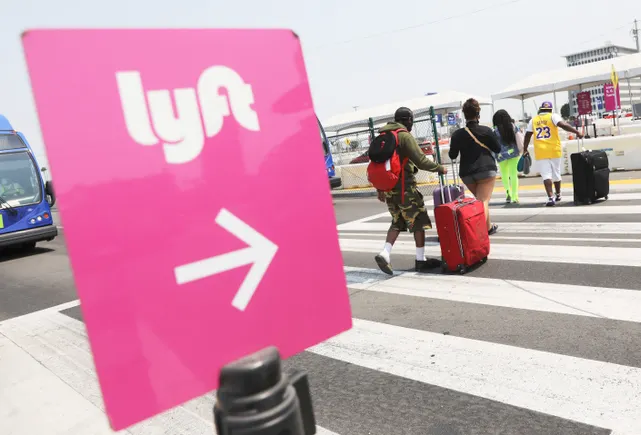
This spring, United Airlines and Lyft announced a new loyalty program partnership, described as the first direct "miles-for-rides" collaboration between a U.S. airline and a ride-hailing platform.
The core convenience: United MileagePlus members can now pay for rides directly in the Lyft app using miles.
This partnership has sparked discussion aboutwhether such loyalty collaborations are wise—that is, whether they truly create value for customers while also benefiting both companies involved.
After all, loyalty partnerships come with risks. Brands may cannibalize each other's sales, and members may compare prices across brands and pick discounts rather than building genuine loyalty to either.
But experts expect the United-Lyft partnership to benefit both parties, as they are not competing for the same consumer spending. Rides to the airport are not a substitute for flights.
This makes the case a useful model for brands considering loyalty collaborations: both sides gain specific value from the agreement without worrying about the other stealing their customers.
The logic of United's gains
The ability for United members to use miles to pay for Lyft rides builds on an earlier partnership—which allowed members to earn miles on Lyft rides and launched last year—just months after Delta Air Lines ended its eight-year loyalty agreement with Lyft and switched to Uber.
Members can use miles for everyday trips, airport transfers, and premium vehicle options. If miles are insufficient to cover the full fare, they can also choose to pay the difference with other payment methods.
For United, the significance of this partnership goes beyond offering members a new way to spend miles. According to Emily Weiss, senior managing director and global travel lead at Accenture, in addition to boosting ticket sales, airline loyalty programs can enhance profits through co-branded credit cards, points redemption, and unused miles.
The value of these programs became especially apparent during the pandemic—when ticket revenue plummeted and airlines raised funds by selling miles to partners.
Gartner director analyst Brad Jashinsky notes that this is because profit margins from credit card partnerships and mile sales are typically much higher than those from flight operations and are more predictable.
Airlines typically sell miles to partners at a discount, and when members redeem those miles for rides, they often get less value per mile than when redeeming for flights.
"But I don't think United is doing this kind of partnership just to burn off miles from its books at a lower cost," Jashinsky said.
The main goal is to make it easier for members to cash in rewards, because occasional travelers may take years to accumulate enough miles for a free flight, whereas now they can gain real value from the program in just one or two trips.
"What they're really trying to do, and what I appreciate about their strategy, is to deliver rewards more quickly to those occasional travelers or new members," Jashinsky said.
However, whether consumers are truly willing to use airline miles for ride-hailing trips depends on the consumers themselves. Points-maximizing users will still use rewards for flight redemptions, as that offers higher value.
But Weiss said many members will welcome more "micro-earn, micro-burn" opportunities to use their rewards.
According to Accenture's 2025 Consumer Pulse research, slightly more than half of airline loyalty members believe these programs no longer offer the same level of value. Over 90% of members want to choose how they are rewarded rather than accept a one-size-fits-all model.
For occasional travelers, new members, and frequent flyers with large mile balances, the Lyft integration offers a benefit that did not previously exist. Members with hundreds of thousands of miles may not be maximizing value per mile, but they are gaining a new perk at zero additional cost.
"They're not forced to use it," Jashinsky said.
Lyft's portfolio strategy
Lyft views itsbrand partnerships as a portfolio, with each partnership playing a different role.
Some partnerships, such as the one with DoorDash, aim to drive ride volume and attract new customers. United fills another niche, as its loyalty members are mostly business travelers booking airport trips, which brings Lyft stronger revenue per ride and profit margins, Lyft CEO David Risher said on the company's May earnings call.
These partnerships are paying off. According to Risher, partner-related rides accounted for 27% of Lyft's total rides in the first quarter, up steadily from about 20%. Lyft also issued more than 350 million miles to MileagePlus members between the launch of the earn feature and the end of the first quarter, and passengers linked to partners book more frequently and at higher price points than those who are not.
Although such partnerships can carry risks, this dynamic often arises when partners are in overlapping spending categories.
Therefore, Weiss said, partner brands should complement rather than replace each other's core value.
But adding more partners is not always an improvement. When brands rush to scale through third-party merchant offers, members often end up with cookie-cutter deals that feel more like ads than loyalty benefits.
"More is not always better, especially when it comes to partnerships," Jashinsky said.
Jashinsky added that brands should start with smaller, time-limited partnerships, set clear goals for specific customer segments, and include mutually agreed exit strategies—which is exactly the path United and Lyft followed: first launching the earn feature in November 2025, then introducing the redemption option five months later.
A United spokesperson said in an email that United "is very deliberate in choosing partners, prioritizing those that enable deep collaboration."
But for customer experience (CX) leaders, the lesson is clear: lowering the rewards threshold to engage occasional customers faster—even with lower points return per transaction—keeps members active in the program and ultimately builds true loyalty.
"How do we reward people earlier in their tenure with the program?" Jashinsky said. "I think this is a great example of that trend continuing to play out."