
Ulta, Tapestry Executives Discuss Modernizing Omnichannel Experience: AI and Loyalty Take Center Stage
At the CommerceNext Growth Show held in New York, executives from companies such as Ulta Beauty, Stitch Fix, Tapestry, and Boot Barn pointed out that omnichannel retail has moved beyond a simple combination of online and in-store, now integrating AI agents and generative search. They agreed that regardless of technological iterations, customer experience and brand consistency, anchored by loyalty programs, remain the core drivers of sales.
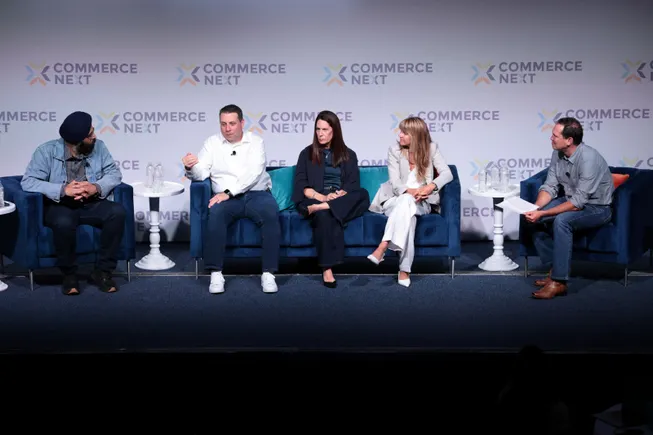
Key Takeaways:
- At the CommerceNext Growth Show in New York on Wednesday, executives from companies like Ulta Beauty and Stitch Fix said omnichannel retail has evolved to include AI and agentic intelligence, but stores still need to focus on customer experience and brand loyalty to drive foot traffic.
- Kimberly Shenk, CEO of marketing technology company Novi, said during a panel on the future of omnichannel retail that retailers need to understand how consumers shop in order to reach them where they are. "Most consumers are turning to agents, agentic platforms, ChatGPT, Gemini to discover products," she said. She added that brand identity therefore needs to be consistent across every touchpoint.
- Josh Friedman, senior vice president of e-commerce and digital at Ulta Beauty, added on the same panel that omnichannel is no longer just about stores and online. "We're seeing more and more guests use our app in stores, and maybe our associates as well," he said. "Taking care of those experiences is very important."
Deep Dive:
Wednesday's panel, titled "From Digital Native to Traditional Institution: The Next Era of Omnichannel," explored how omnichannel is reshaping retailers' customer experiences.
Shenk said that when businesses gain a deeper understanding of how AI works in the omnichannel shopping experience, they can better position themselves for success.
"AI recommends products as solutions to consumers' questions," Shenk said. "It doesn't recommend brand names."
Therefore, brands need to be well-positioned in the diffuse queries of large language models (LLMs), which conduct their own research to answer consumer questions. "(AI) doesn't just take the user's prompt verbatim. It takes the user's prompt and triggers thousands of its own queries."
However, Shenk noted that search results don't always directly translate into cart activity. "A lot of times this doesn't lead to a click because consumers love their points in the Ulta Beauty rewards program, of course," she said. "They want to go back there, so the loyalty piece is still critical."
Friedman said Ulta Beauty has 47 million loyalty program members and "95% of our sales go through the loyalty program." Combining that customer experience with AI has helped the company "develop better algorithms, generate better content, and more content," Friedman said. He added that the company's recent launch ofUlta AIhas created a more integrated omnichannel shopping experience.
Panel moderator Jon Kosoff, chief digital officer at Boot Barn, also discussed integrating the company's loyalty program with online, in-store, and in-app experiences. He said Boot Barn currently fulfills 30% of orders through in-store pickup and 40% of orders ship from stores, but across all channels, loyalty is the most enduring connection.
"We just relaunched our app in April," Kosoff said, adding, "Loyalty is key to that, and we just relaunched our tier-based loyalty program."
Meanwhile, Stitch Fix Chief Marketing Officer Debbie Woloshin said technology is a means to achieve customer engagement.
"We do have an app, and about 60% of our clients have downloaded and regularly use it," Woloshin said on the panel. "But I want to step back from a loyalty perspective; we're essentially in the relationship business."
She said clients often share "very personal information" with the company, and combining technology tools with human stylists is key to building and maintaining those relationships.
"For example, when someone is pregnant, sometimes we're the first to know," Woloshin said, adding, "There's a lot of work beyond just the rewards function to truly build and deepen personalization."
Mandeep Bhatia, senior vice president of global digital products and omnichannel innovation at Tapestry, said building lasting customer relationships also comes from creating an omnichannel experience that feels consistent across every platform.
"In the past, it was difficult to scale the in-store concierge experience and omnichannel experience online," Bhatia said. "Now with agentic AI, we can. We talk to hundreds of store associates and ask them: 'What do customers ask when they come in? How do they talk to you?'"
Bhatia said Tapestry trained its chatbot based on those conversations to create a distinctive brand experience. "We want customers to have the same experience they would in a store, so that's exactly how we think about the omnichannel architecture—not just from a technology standpoint, but also from a brand standpoint," he said.
Bhatia added that omnichannel is about the consumer, not the computer.
"Don't start with technology first," Bhatia said. "I mean, just because AI exists doesn't mean we have to go build those things. It has to be rooted in understanding the customer and understanding the associate." He added that technology is creating an experience that "is either a painkiller, a vitamin, or chocolate, right? So you have to figure out how to balance that, but that can only come from understanding customer needs."